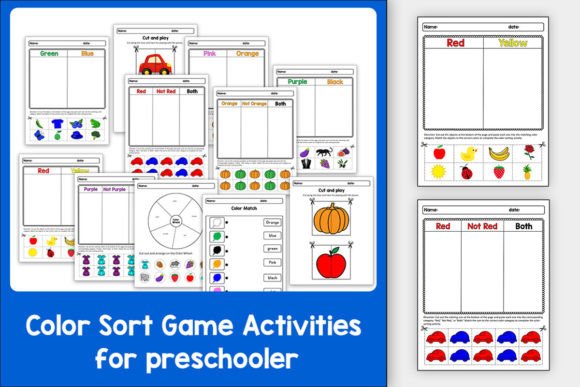
Color Sort Game Activities: A Classroom Essential
As educators and content creators, we often look for the intersection of engagement and education. The Color Sort Game Activities resource serves as a perfect example of this balance, functioning much like a premium font in your design toolkit—it is versatile, functional, and elevates the overall experience. Just as a display font grabs attention, the vibrant color stations create immediate visual impact in a preschool setting. This resource is designed not just for rote memorization, but to build a strong foundation in visual literacy, mirroring the way modern typography guides a reader's eye through content.
Visual Hierarchy and Classroom Design
In the world of brand identity and design, consistency is key. The Color Sort Preschool Learning Activity applies this principle to the classroom. By utilizing distinct color mats for red, orange, yellow, green, blue, purple, black, and white, you establish a clear visual hierarchy. This is similar to how a designer might use a sans serif font for clarity and a serif font for tradition. The "stations" approach allows you to physically map out the learning environment, creating a flow that feels intuitive.
- Station Setup: Think of each color station as a page in editorial design. You want the layout to be clean and the focus to be singular.
- Visual Consistency: Using the provided mats ensures that the "Red" looks the same across all activities, reinforcing recognition similar to how consistent typography builds brand trust.
- Interactive Elements: The file folder sorts act like interactive design elements, inviting the student to engage rather than passively consume.
Practical Applications for Educators and Designers
Whether you are a preschool teacher, a homeschool parent, or a creator designing educational digital assets, this resource adapts to various contexts. It functions like a versatile creative font—it works for formal instruction (Morning Work) and casual exploration (Independent Practice).
Morning Work and Intervention: Start the day with the energy of a bold handwritten font. The "Color Sort Game Activities" are perfect for morning warm-ups, helping students transition into learning mode. Conversely, for those needing extra help, these activities serve as targeted intervention tools, much like a designer might switch to a more readable typeface to ensure accessibility.
Enrichment and Independent Practice: For advanced learners, the file folder sorts offer depth. This mirrors the process of font pairing in graphic design—combining different elements to create a richer experience. Encouraging independent practice fosters autonomy, allowing students to "design" their own understanding of color theory.
Integrating the Resource into Your Toolkit
Treat this resource as a core component of your teaching strategy, similar to how a commercial font is central to a web design or packaging design project. The visual appeal of the color mats—their saturation and clarity—plays a significant role in engagement. Just as a poorly chosen script font can ruin a logo, a dull presentation of colors can disengage a young learner.
Consider these practical tips for integration:
- Evaluate the Fit: Just as you would test a premium font for a logo, observe how your students respond to the specific hues used in the mats. Are they distinct enough for your lighting environment?
- Create Variety: Use the mats for social media graphics if you share classroom updates, or incorporate them into print newsletters for parents. The visual consistency strengthens your classroom's brand identity.
- Focus on Readability: In design, we prioritize readability. Here, ensure the color names and visual swatches are clear. The "Color Sort Game Activities" are designed with high contrast to aid in this, functioning much like a well-kerned sans serif font.
The Value of Structured Play
Ultimately, the goal of the Color Sort Preschool Learning Activity is to make learning systematic yet fun. It provides the structure of a grid system in modern typography while allowing for the creativity of a handwritten font. By incorporating these activities into your daily routine—whether for intervention, enrichment, or daily practice—you are investing in a resource that values both form and function. It’s an educational tool that respects the principles of good design: clarity, engagement, and purpose.